
Amanda Knox, who was wrongfully convicted and later acquitted in a high-profile Italian murder case, spoke at Powell’s Books on Cedar Hills Friday night to discuss her new book, Free: My Search for Meaning.
Speaking to a crowd of roughly 150 people, Knox read a brief excerpt from her new memoir before being joined onstage by acclaimed local author Chuck Palahniuk, best known for Fight Club. They discussed the difficulties she had reintegrating into society after her ordeal and learning to live her life despite having to face public scrutiny every time she gets recognized.
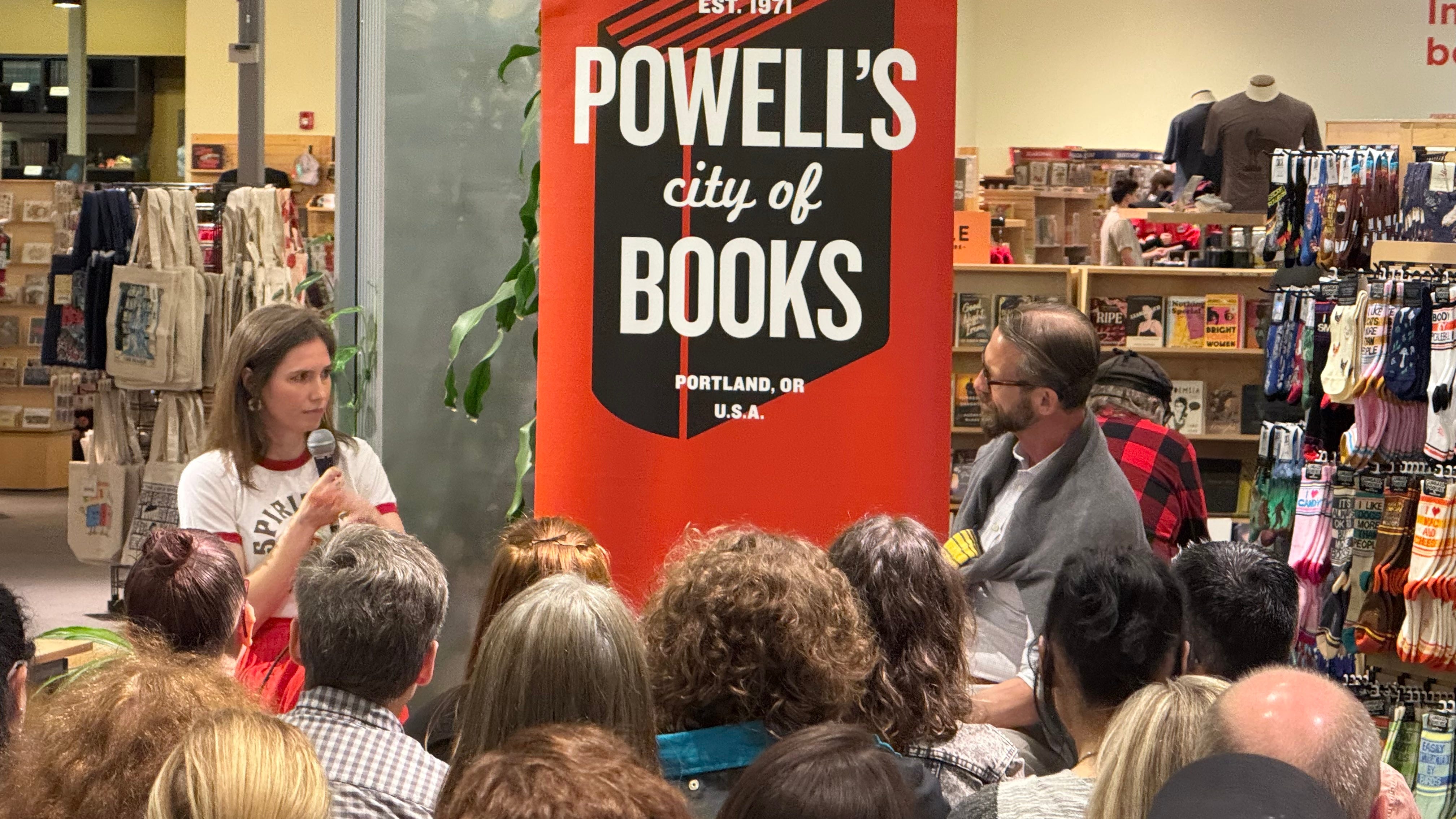
Knox hinted at one of the memoir’s most surprising chapters: her return to Italy to meet with the prosecutor who helped convict her—an encounter that led to a sense of reconciliation.
She spoke movingly about the unwavering support of her mother during her time in prison, and the quiet strength of her husband, who accepts her fully—on both good days and bad.
Motherhood, Knox said, holds deep personal meaning. Early in her imprisonment, she resigned herself to the idea that she would never become a mother while serving what could have been a 27-year sentence. Now, she says, being able to reclaim that future is among her greatest joys.
Personal Thoughts
I followed this trial like everyone else. I remember the shock of learning about details of the murder and then surprise that authorities said her roommate was responsible. That later turned to anger as we learned about details that were never presented at trial, leading to Knox’s conviction.
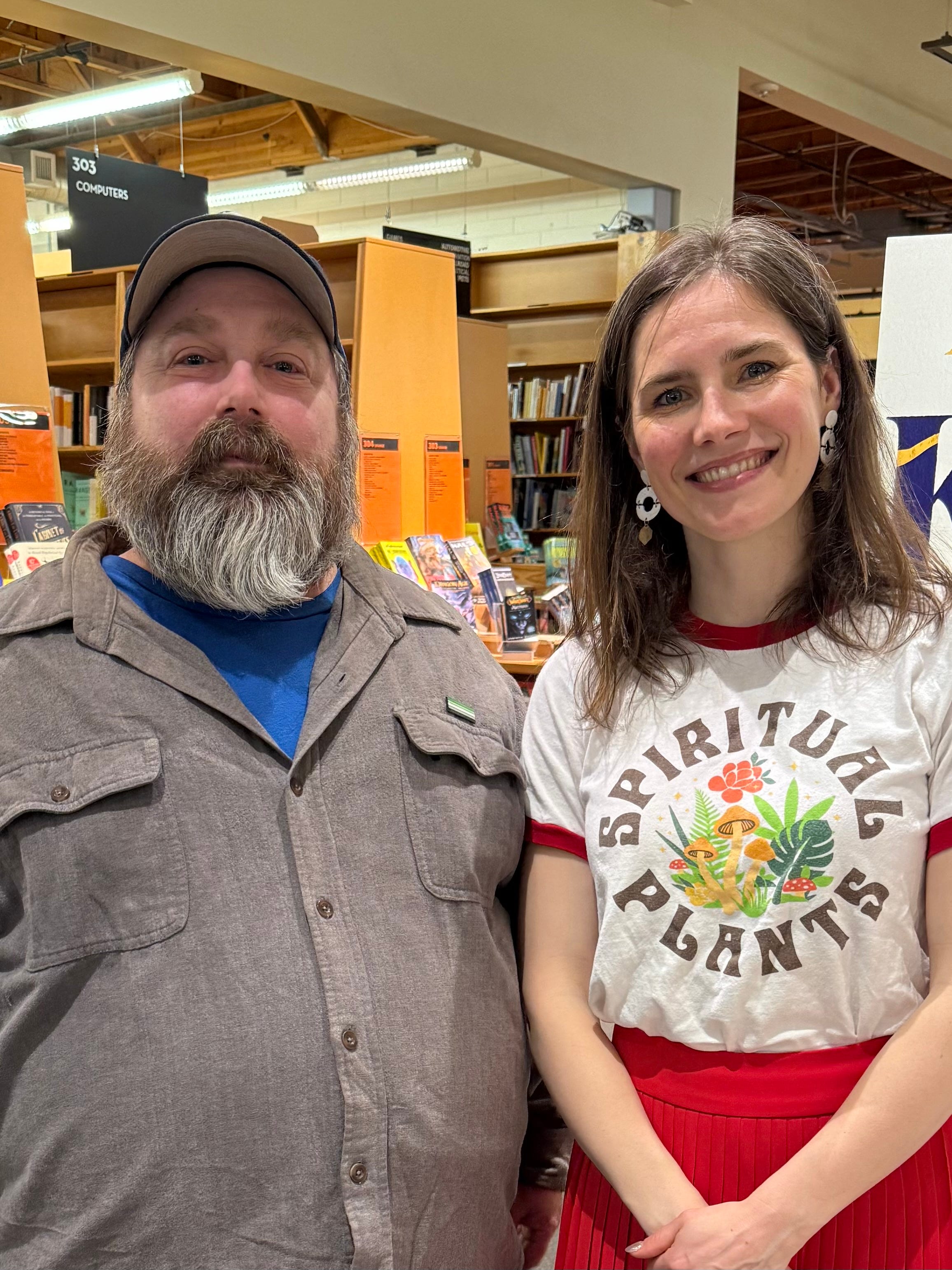
One of the things people often pointed to as “proof” of Amanda Knox’s guilt was how oddly she behaved in the aftermath of the crime. But honestly, if my own meeting with her proves anything, it’s that human behavior is rarely tidy or logical—especially under stress. After spending hours in chairs that felt like they were designed for the Spanish Inquisition, I finally got to meet her… and the first thing out of my mouth was, “When I watched the Netflix documentary, I came away thinking, ‘Wow, her life is always going to be shitty.’”
After an awkward pause, she said something like, “Well, luckily things didn’t turn out that way,” and then we took our picture together. (Which, let’s be honest, I looked like a disheveled hillbilly who just came down out the hills to hear the Darlings set in to a-pickin’ and a-grinnin’ in Mayberry.)
The unspoken thought behind my strange comment was that I was glad to see that life was turning out more positively for her than I thought was possible after being hounded by paparazzi and judged by everyone she met after returning home. I’m glad she has been able to pursue fun things like swing dance classes and learning how to do stand-up comedy. I’m glad to see her happy in life.
Parting Thought
I can’t help but wonder if the title Free: My Search for Meaning is an intentional nod to Viktor Frankl’s Man’s Search for Meaning. The circumstances each author faced were worlds apart—Knox imprisoned in Italy, Frankl surviving the Holocaust—but the underlying themes echo one another: enduring suffering, reclaiming identity, and finding purpose in the aftermath of trauma. While Knox would never equate her experience with the horrors Frankl endured, the process of making meaning from pain is a thread they quietly share.
 The Philomath
Leave a comment