
for March 30, 2025
SCREEN
‘Adolescence’: the modern ‘400 Blows’
The internet is buzzing about the Netflix drama called Adolescence. It is the best bit of television I’ve seen in years. Acting, writing, and production all came together for an experience that was heartbreaking and real.

The story begins with a police raid on a middle-class family’s home, where they arrest 13-year-old Jamie for the heinous crime of murdering a female classmate the previous night. By the end of the first episode, we witness the CCTV video that proves the child’s guilt in committing the crime. The subsequent three episodes delve into Jamie’s world and the devastating impact he had on the lives of those around him.
As I watched the series, I kept thinking about Francois Truffaut’s influential film The 400 Blows (1959). But why? I decided to rewatch The 400 Blows.
These boys’ lives were very different. Antoine, the 14-year-old character in The 400 Blows, lives in a low-income tenement in Paris with parents who are completely absorbed in their own lives and pay little attention to him. Jamie, on the other hand, comes from a loving middle-class family. Although his parents have the normal distractions from work and life, Jamie is not wandering the streets getting into trouble. Unfortunately, the trouble is accessed in his own bedroom as he wanders the digital world through his smartphone.
So why did I feel like the two films were in the same vein? The boys were separated by 65 years. Their cultures were different. And, of course, the advent of smartphone technology played a crucial role in Adolescence. That’s when it dawned on me — adolescence. Both films were an unsentimental look at boys trying to navigate adolescence.
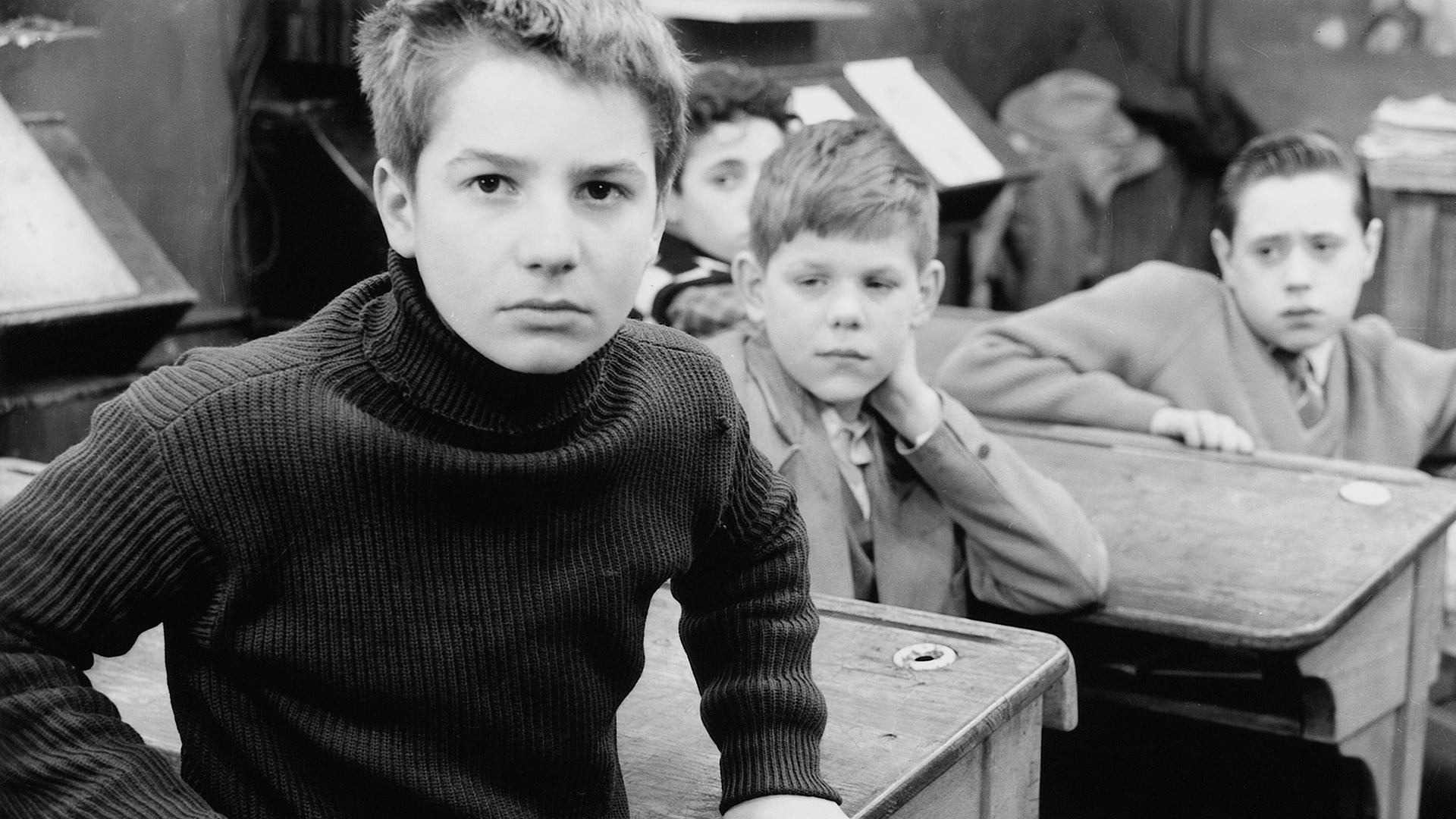
Both boys faced the normal transition from being part of the family identity to defining self. The age-old question: Who am I? Antoine looked to the streets and institutions around him. They were indifferent to him, and he felt he had to set out on his own to define himself. Jamie turned to the online world to try to define himself. The messages he received led him to define himself within a misogynistic online culture.
Antoine and Jamie both experienced alienation. Antoine was labeled a troublemaker by his school and his parents didn’t want him. When his friends went home, he was left alone. Jamie, too, was rejected by his attempts to socialize. Rebuffed by his classmates online, he too, found himself alone and sought false camaraderie within the misogynistic “incel” culture online.
Unfortunately, both had consequences for their negative actions as they tried to navigate adolescence. Antoine was removed from his home and sent to a reform school. Jamie was sent to prison for murder, presumably for life.
Adolescence is hard to navigate, as we all know. We want to define ourselves as individuals, at least in relation to our families. At that age we want to set out and find our own group outside the home. We want to show that we can be adults (someday), so we want to make decisions without our parents.
Now, as true adults, we look back and realize we were still children then. Although we wanted to believe we were mature enough to figure things out on our own, we still needed guidance. Parents just needed to be—well, they needed to be present, first of all—but also crafty enough to provide guidance without telling us what to do.
Looking at the two productions, I think Adolescence felt more real and relevant, primarily because that is the time I live in. I don’t have children, and won’t, but I still care deeply for what happens to the children in our society. I want to see them grow up happy and healthy. In today’s world, where constant messaging is always available in our pockets, I believe the threat to the well-being of children is particularly high. I don’t have advice on how to deal with it. I just hope parents are able to figure it out.
Parents, if you’ve watched Adolescence, I would love to read your responses to these questions:
Did you watch this show with your children? If not, have you discussed it with them.
Were you aware of the “manosphere” before this program? Were they?
Had you ever heard of Andrew Tate?
Were you or they aware of the term “incel,” and is it a concern for them?
Have you decided to make any changes about social media, smartphones, etc., in their lives? How about your own?
PAGE
A look at The Dead Are Arising: The Life of Malcolm X
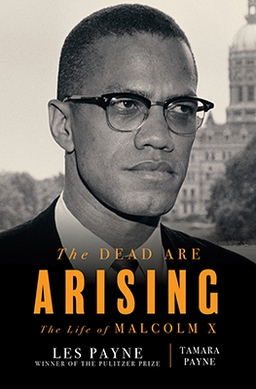
When I was growing up, the U.S. Congress was debating the creation of a holiday to celebrate the birthday of Martin Luther King, Jr. His life and accomplishments were the main focus of what little we learned about the lives of Black Americans and the Civil Rights movement. I don’t think I was aware of Malcolm X until the 1992 film about him by Spike Lee. And even then, I didn’t watch the movie until years later. What little I picked up about him at the time was through a very white lens.
A book group I was part of a few years back voted to read The Autobiography of Malcolm X, as told to Alex Haley. I thought it was a great read. What I knew about him before that was a white racist perspective. His autobiography let me see the effects of racism in America through his eyes.
But that was an autobiography. I know from my own life that my memories of events don’t always match the way others remember them. When I tell my story to people, I play some things up, downplay others, and leave some things out. I imagine everyone does that, so I wanted to read a biography of Malcolm X written with hindsight. Coincidentally, a new biography was published in 2020, and it went on to win the National Book Award for Nonfiction (2020) and the Pulitzer Prize for Biography (2021). I decided that was the one I wanted to read. As is my habit, I bought it then let it sit on my bookshelf for a few years. I finally read it this year.
Les Payne and his daughter Tamara Payne worked on The Dead Are Arising: The Life of Malcolm X for 30 years. Les Payne died two years before its publication and was finished by his daughter. They interviewed multiple sources about different times and events of his life to get a more complete picture. I won’t hash out all the differences between the Autobiography of Malcolm X and The Dead Are Arising. I will briefly list the main things I got from the latter that I did not get from the autobiography.
The Paynes were able to include a lot about Malcolm Little (aka Malcom X) as a child. We got a closer look at his family as they moved from Omaha to Milwaukee, and then to Lansing, Michigan. We learned about his parents’ involvement with UNIA movement started by Marcus Garvey, their defiance of living life in the boundaries that whites expected from them, and the death of his father when Malcolm was six.
We learned more about the youth of Malcolm as he grew without the guidance of his father and the effect of a subsequent nervous breakdown that sent his mother to the Kalamazoo State Hospital. The Paynes were able to provide more details about Malcolm’s time in the foster care program in his junior high years—the good and the bad.
There was a lot of clarification and corroboration of his life in Boston and Harlem as it was presented in the autobiography. Honestly, my big disappointment in this section was to learn that the person named Shorty in the autobiography was actually a compilation of three people in real life.
I was really interested by the chapter that covered the time Malcolm X spent developing the mosque for the Nation of Islam in Hartford, Connecticut. He largely skipped over this period in his autobiography, but it was an important turning point in Malcolm’s influence on the Nation of Islam, but also was the seed of later distrust by the family of the cult leader of the NOI, Elijah Muhammed.
Another important chapter that covered an event that was not in the autobiography was the meeting between the Nation of Islam and the Ku Klux Klan. This secret meeting between Malcolm X and Jeremiah X for the NOI and very influential Southerners who were members in the KKK was the real wedge that three years later led to the split between Malcolm X and the Nation of Islam.
Most important, I think, are the chapters on the assassination of Malcolm X. The information that Alex Haley was able to put together about the murder was full of unknowns and inaccuracies. Deathbed confessions and other interviews that took place decades later gave a clear picture of who ordered the killing and who took place in it.
The last thing I want to note is how both books were finished posthumously. Alex Haley was writing the autobiography in what is known as an “as told to.” That is a story that is narrated by the subject to a professional writer who then writes the book in the first person for the subject. Since Malcolm X was killed before it was published, Alex Haley put together the end of the book himself. Similarly, Les Payne died before his book The Dead Are Arising was finished. His daughter served as his chief researcher for the thirty-year project and completed the book upon his death.
 The Philomath
Leave a comment