20 February 2025
Missing: The Key Piece
I wish I had something substantial for my key piece this week. My goal with this blog/newsletter was to have a key piece on some subject at the top. I want it to be a place for my philomath ways. Some kind of piece on something I learned that I thought was interesting. I have some ideas for future pieces, but I want to learn a little more before I present them.

I’ve kind of been in a funk this past week. It is another “chicken or egg” question. Am I depressed because I’m raging at things Trump is doing or am I raging at Trump because I’m depressed? I don’t know, but I’ve been pissed off at news stories. Sure, I could stay away from the news, but I feel like that is the wrong thing to do with Trump. We need to know what’s going on with our government. Our complacency with what our government does has led us to someone who is taking advantage of how we turn a blind eye to what our government is doing.
My friends know that I don’t like either the Democratic or Republican party. I wouldn’t go as far as the anarcho-syndicalism proposed by Noam Chomsky, but he definitely correct that both parties have been promising to make things better for decades (maybe centuries), but it never gets better. The poor stay poor and the rich stay rich, and there isn’t much mobility from the bottom to the top. We are always promised that we all can be part of the moneyed elite if we just pull ourselves up by our bootstraps.
There are important questions that I think the American people need to step back and discuss. I think the biggest question that we need to talk about is whether society should favor individual success or altruism and mutual success. I lean toward the altruistic purposes of government. We don’t come together to form a government so that we can not come together (if I may talk in a circle). We form a government to take care of our mutual concerns. Mutual. Shared. Reciprocal. Give-and-take. Give-AND-take. GIVE-and-take.
Why have a government if we don’t use it for mutual aid of the other participants in the society? It will never be a single-minded entity. There will always be disagreements about how we should achieve the goals of our society. But our society needs to include altruism among its goals.
NEWS IN BRIEF
I celebrated my birthday in grand style. I had two slices of pizza at Sizzle Pie and a slice of Neapolitan-flavored cheesecake at Whole Foods.
I started packing for the move next month. Even though I started with my books, I can’t stop buying more books. I just received my leather-bound copy of Bram Stoker’s Dracula from the Easton Press.
Downtown Portland received some snow last week. The accumulation was about 3” and lasted a couple days before the temperature warmed back up and the rain melted it.
LOOKING AHEAD
More packing. There are only 17 days until the movers arrive.
I hope to see the Documentary Oscar-Nominated Short Films this Saturday.
ARTS & ENTERTAINMENT
Book Review: The Fortune of War, by Patrick O’Brian
It is 1812, and the United States has declared war on England. Captain Jack Aubrey and Dr. Stephen Maturin, take transport from the Dutch East Indies to London. Aubrey’s new command of the frigate HMS Acasta awaits him. But “Lucky Jack” has run out of the luck that earned him his nickname.
The Fortune of War is the sixth book in the Aubrey-Maturin series of nautical adventures by Patrick O’Brian. After six books, O’Brian still amazes me with his knowledge of sailing and ships from the Age of Sail. I may not know the difference between a mizzen and top gallant, but his detail makes it easy to feel like you are asea with the Royal Navy fighting for the glory of the Empire.
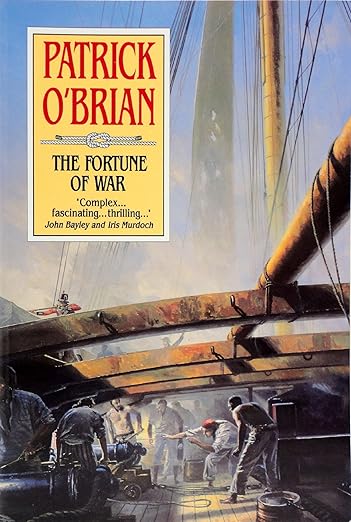
The first third of this book is packed with action, which is different from the typical structure of an O’Brian novel. If you’ve read any of this series, you know that patience is a virtue as he slowly builds to action later in the novel, but in this book there are several turns of fate early, and Jack’s luck runs out. Then the story turns to the intrigue of Dr. Maturin’s intelligence activities until the end when they have a fantastic sea battle.
The bromance between Capt. Aubrey and Dr. Maturin is one of the things I love about these novels. Jack Aubrey is brash and daring. Stephen Maturin is quiet and scientific. Despite these differences, the two men admire and care deeply for each other. Alongside the friendship between Mile’s O’Brian and Julian Bashir of Star Trek: Deep Space Nine, this is one of my favorite bromances.
The downside of The Fortune of War is my same criticism of all the previous O’Brian novels — pacing. His writing is stilted and prone to long passages that linger on the inner workings of our heroes. I think part of that languid writing is meant to emulate the writing from the Napoleanic era in which they take place.
Another thing that some readers may not like is the very thing that I enjoy. All the sailing lingo from the early 1800s can make it hard to follow at times, although I feel more comfortable with it by book six. If I cannot work out what is happening from the context, I have two companion books for the Aubrey-Maturin series: A Sea of Words, Third Edition: A Lexicon and Companion to the Complete Seafaring Tales of Patrick O’Brian and Harbors and High Seas: An Atlas and Geographical Guide to the Complete Aubrey-Maturin Novels of Patrick O’Brian. Both reference books are by Dean King, and if you plan to tackle all or most of the O’Brian novels, I recommend finding a copy of each for your home library.
Cinema: A Short Synopsis of Short Films
On Saturday, my friend Brent and I went to the Hollywood Theatre to watch the offering of Oscar-nominated short films. There were three programs offered, and we watched two of them: the Animated Oscar Nominated Shorts and the Live Action Oscar Nominated Shorts. Here are some short notes on the short films.
Animated Oscar-Nominated Shorts Program
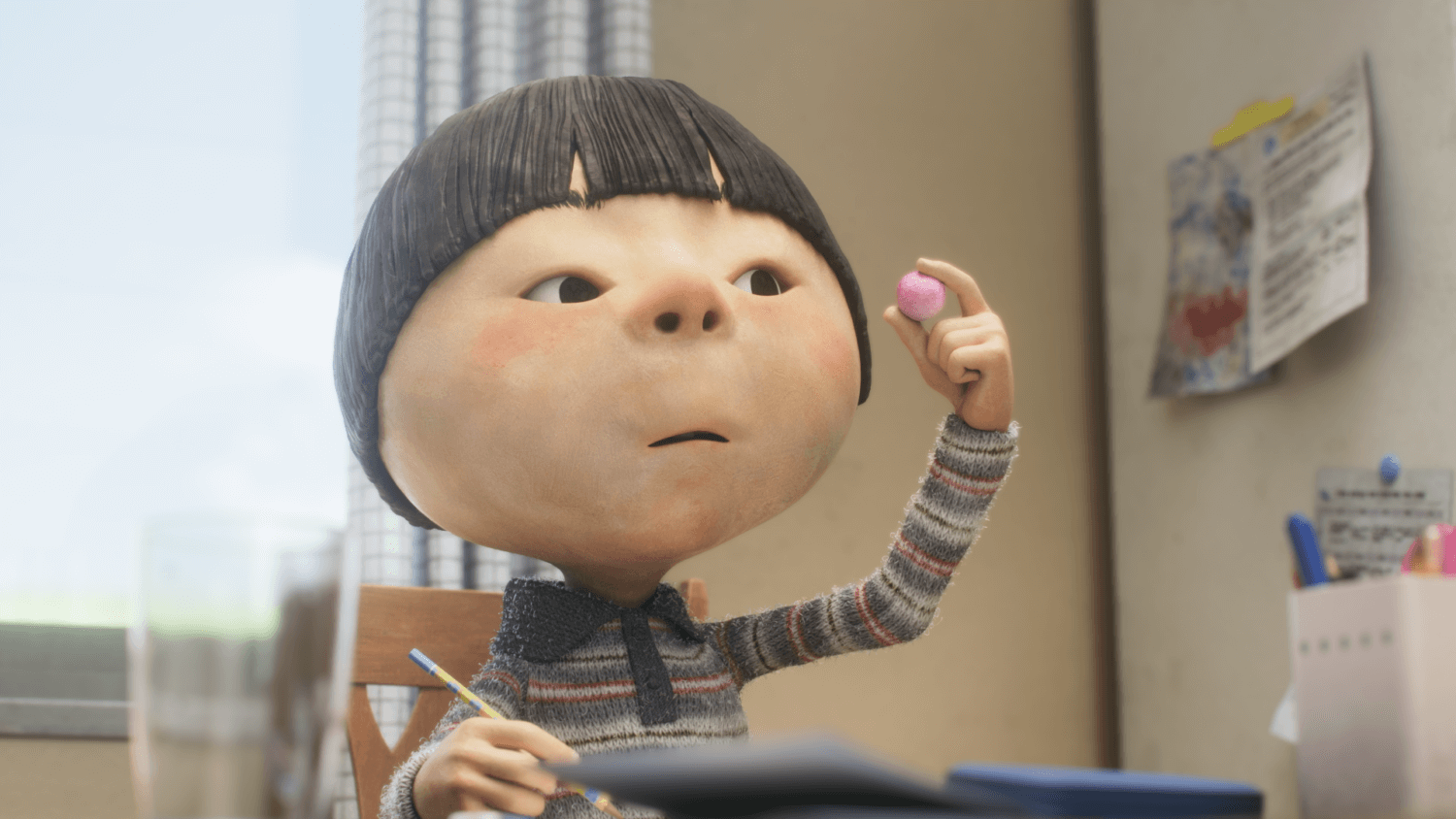
Magic Candies – Daisuke Nishio, 21 min., Japan (in Japanese)
This was easily my favorite film in the animated program. Dong-Dong is a lonely boy who often plays by himself in the park. (I will not make a Dong joke. I will not make a Dong joke.) He goes to a five-and-dime to get some new marbles but ends up with some candies. As the title implies, there is something special about these candies. Dong-Dong trips out several times H.R. Pufinstuf-style, but is better for the experience in the end.
In the Shadow of the Cypress – Hossein Molayemi and Shirin Sohani, 20 min., Iran (no dialogue)
I was really at a loss during the film. It’s obvious the old man had PTSD from some wartime experience, but I don’t know enough about Iranian history to put together what war. Was it the war against Iraq? That’s the only one I can think of, but maybe this was set in an older period. All I can say is that it was bleak, and he didn’t treat his daughter well, although he tried to be a good man.
Yuck! – Loïc Espuche, 13 min., France (in French)
So cute. So French. This film had my favorite artwork. It’s all about l’amour. A group of kids on vacation with their families are continually grossed out by people sharing a kiss, but a boy and girl in the group start to feel the urge to share their first kiss. It was cute.
Wander to Wonder – Nina Gantz, 14 min., Netherlands/Belgium/France/UK (in English)
This was…odd. Once you realize there is a dead body lying on the floor, it changes the tone. Imagine “Shaun the Sheep” meets “Mr. Rogers,” but Mr. Rogers dropped dead before the show started, and the animated characters don’t know what to do with themselves. Throw in some Muppet wiener for the character who can’t remember to wear pants, and you’ve got a show.
Beautiful Men – Nicolas Keppens, 18 min., Belgium/France/Netherlands (in Flemish, Dutch, Turkish, and English)
This was well written. Three brothers go to Istanbul to get hair transplants. Old rivalries that keep the brothers from being close are dealt with so that the brothers can try to reconnect. This film also has some Muppet wiener.
Live Action Oscar-Nominated Shorts Program
The Man Who Could Not Remain Silent – Nebojsa Slijepcevic, 13 min., Croatia (in Croatian)
This film took place during the breakdown of the Yugoslavian state and the genocide committed against Muslims in Bosnia. A passenger train is stopped by quasi-military men who pull anyone off the train who can not provide documentation or otherwise prove they were not Muslim.
SPOILER: The man who could not remain silent was not the man who swore he would not let anything happen to the man in their train compartment without identification.

I’m Not a Robot – Victoria Warmerdam, 22 min., Belgium/Netherlands (in Dutch)
This was my favorite from the live action shorts. A woman is working at her computer when she is redirected to CAPTCHA*. This is the annoying online challenge we have all experienced where it wants us to click on all the squares that include tires or bumpers or bridges or whatever. She cannot prove she’s human to the computer.
Several scenes cause her to question whether she is, indeed, a robot. She cannot accept that conclusion and tries to prove that she is human. To be honest, I’m still not sure whether she was a human or a robot, but I like that about it.
* I just learned that CAPTCHA stands for “Completely Automated Public Turing test to tell Computers and Humans Apart.”
Anuja – Adam J. Graves, 22 min., USA (in Hindi)
Anuja is a young girl working in a garment factory in India with her sister. She must make a decision about whether to take a test for a scholarship to a boarding school or stay with her sister in a life with a very bleak future. The strength of this film is that we get to see the good times the two girls spend together on a day off from work.
We don’t find out whether she goes to take the entrance exam, but we are treated with documentary footage of the girl who played Anuja watching the film with her classmates at a school just like the one her character was considering attending. Her schooling is funded by the Salaam Baalak Trust.
The Last Ranger – Cindy Lee, 28 min., South Africa (in Xhosa)
“The Last Ranger” is like “Anuja” in that we are seeing a moment in the life of a young girl in a situation that determines her future. This film takes place in South Africa in the recent past when Covid-19 caused the game reserves to suspend ranger operations. Litha spends the day with a ranger who continues to work on a volunteer basis.
In the end we learn that the events in the film were real, and we see documentary footage of Litha speaking about her decision to become a ranger.
 The Philomath
Leave a comment